
Can Victorian Pine Floorboards Be Sanded and Restored Properly? | South West London
Yes — in many cases, Victorian pine floorboards can be sanded and restored beautifully, provided the work is approached with care, the right repairs are carried out first, and the finish is chosen to suit the age, softness and movement of the timber. For homeowners looking into wood floor sanding in South West London, original pine boards are often one of the most rewarding floors to restore because they carry genuine character, warmth and period charm that modern replacements rarely match. The company’s site states that it provides sanding, repairs, staining and resealing with oil, lacquer or hard wax, and highlights dust-controlled sanding, repair work, and long experience in the trade. (Floor Sanding Southwest London)
Victorian pine floorboards are especially common in older South West London homes, where restoring original timber can transform a room far more effectively than covering it with carpet or replacing it with new boards. When handled properly, sanding removes old finishes, ingrained dirt, paint residues and surface damage, while restoration work deals with loose boards, gaps and worn sections before the final protective coats are applied. If you are comparing options, it also makes sense to look at the company’s main floor restoration and sanding services in South West London as part of a wider plan for your property.
Why Victorian Pine Floorboards Are Worth Restoring
Victorian pine floorboards have a look that is difficult to replicate. The boards tend to be wider, softer and fuller of natural variation than many newer timber floors. Knots, grain shifts, old nail marks and slight undulations are not faults in themselves; they are part of what gives period flooring its lived-in appeal.
In a Victorian or Edwardian home, restoring the original pine often preserves the feel of the building better than replacing it. Once sanded and sealed, old pine can brighten darker rooms, make smaller spaces feel larger, and work equally well with period décor or more contemporary interiors. On the homepage, the business explains that it restores wooden floors in homes and commercial settings, repairs damaged timber, removes old finishes, and offers resealing in oil, lacquer or hard wax. (Floor Sanding Southwest London)
Another important point is value. Replacement flooring involves material costs, disposal, fitting, and often subfloor disruption. Restoration usually makes better use of what is already there. Where the boards are structurally sound, sanding and refinishing is normally the more sensible route.
Can Victorian Pine Always Be Sanded?
Not always, but very often yes.
The key question is not the age of the floor. It is the condition of the boards. Pine is a softwood, so it dents, dries, moves and wears differently from oak or other hardwoods. Before sanding starts, an experienced contractor should inspect the floor for:
- loose or springy boards
- woodworm damage or rot
- black staining from historic moisture
- cracked edges and split tongues
- previous over-sanding
- missing sections near hearths, pipe runs or old partitions
- large draughty gaps between boards
If the boards still have enough substance and are basically stable, they can usually be restored. Even heavily worn floors can often be saved with localised repairs, reclaimed pine inserts, gap treatment and careful sanding rather than aggressive cutting.
The South West London site’s quote form specifically asks users to identify board floors, pine timber, gap filling needs, colour change requirements and finish type, which shows these are normal parts of assessment before restoration work begins. (Floor Sanding Southwest London)
The Biggest Challenges With Victorian Pine
Victorian pine floorboards are restorable, but they are not “easy” floors in the way that some modern engineered boards can be. The main challenges usually include the following.
1. Soft timber surface
Pine marks more easily than denser woods. That means careless sanding can leave ripples, dish-out between boards, edge damage or visible drum marks.
2. Gaps and movement
Old floorboards naturally expand and contract. Some gaps are cosmetic, while others create draughts and catch dirt. Wide gaps may need pine slivers rather than simple resin filling.
3. Historic coatings
Victorian boards are often hidden beneath paint, bitumen residues, carpet underlay marks, black varnish, wax, or multiple generations of finish. These layers can slow the sanding process and may need a more careful abrasive sequence.
4. Previous poor repairs
DIY patches, mismatched timber, random screws, broken tongues and filler-heavy repairs are all common in old period floors.
5. Unevenness
A Victorian floor is rarely perfectly flat. Good restoration improves the look and feel without trying to erase every sign of age.
That is why specialist wood floor sanding in South West London matters more with period pine than with many newer floors.
What Proper Restoration Actually Involves
A proper restoration job is about more than just running a sanding machine over the floor. The best results come from a structured process.
Inspection and preparation
First, the floor is assessed room by room. Loose boards are fixed, protruding nails are punched down, damaged sections are identified, and any areas affected by old hearths or removed walls are noted. The contractor should also discuss whether you want a natural finish, a warmer tone, a darker stain or a more muted matt look.
Repairs before sanding
Repairs come before beauty. Broken boards may need replacing with reclaimed pine. Loose sections are secured. Small defects can be repaired during the sanding process, while larger gaps may need slivers or more traditional repair methods.
The company’s pricing page lists reclaimed pine floorboard replacement, cosmetic gap filling, resin-based gap filling and wider-gap solutions among its services, which is particularly relevant for old Victorian board floors. (Floor Sanding Southwest London)
Sanding in stages
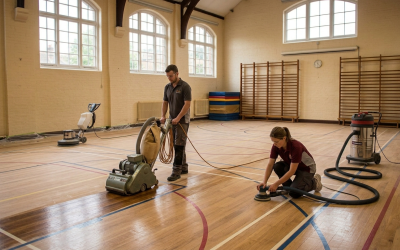
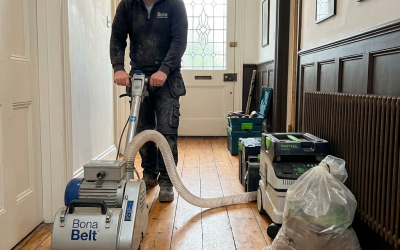
Victorian pine should be sanded gradually, not brutally. The aim is to remove surface damage and old coatings while preserving as much healthy timber as possible. A professional process generally moves through progressively finer abrasives, with edge sanding and detailed finishing around corners, thresholds and fireplaces.
The company’s published guide on wood floor sanding in South West London describes a step-by-step process involving preparation, repairs, dust-controlled sanding, detail work, optional staining and final sealing. (Floor Sanding Southwest London)
Gap filling where appropriate
Not every floor should be filled wall-to-wall. On older pine, the right approach depends on the width of the gaps, the amount of seasonal movement, and whether draught reduction or appearance is the main goal. Some floors benefit from selective filling only. Others need a more complete repair plan.
Sealing and finishing
Once the floor is clean and finely sanded, the finish determines both the final appearance and the practical durability. This is where many homeowners make the biggest visual decision.
Which Finish Is Best for Victorian Pine?
There is no single “best” finish for every Victorian pine floor, but there are clear differences between the main options.
Lacquer
A good lacquer suits busy households that want a protective film finish and straightforward maintenance. It can work well in hallways, living rooms and family homes where wear is heavy.
Bona states that Bona Traffic HD reaches light use quickly, may be put into full use after around 12 hours, and should be left at least 3 days before covering with rugs or placing heavy items on the floor. (Bona)
Hardwax oil
Hardwax oil is popular on Victorian pine because it tends to flatter the natural grain and gives a softer, more organic appearance. It is often chosen where homeowners want a traditional, less plastic-looking finish.
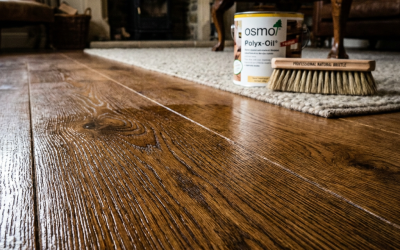
Osmo states that Polyx-Oil Original is suitable for interior wooden floors, is typically applied in 2 coats, dries in around 8 to 10 hours under normal conditions, and has an overall curing period of roughly 10 to 14 days. (osmouk.com)
Stain plus seal
If the pine looks too orange or uneven for your taste, staining can rebalance the colour before sealing. This needs skill on old softwood because pine absorbs colour differently across the grain and around knots.
For anyone considering this route, the site’s existing post on staining wood floors is a relevant internal reference to include during the article build.
Should You Keep the Natural Pine Colour?
Often, yes.
Freshly sanded Victorian pine usually appears much lighter than people expect. Over time, old finishes, grime and oxidation can make the boards look far darker, redder or patchier than they really are. Once restored, many homeowners decide that a clear matt or natural hardwax finish gives them exactly the warm, honest look they wanted all along.
That said, some clients prefer:
- a slightly smoked or muted tone
- a medium oak look to reduce yellowing
- a darker stain for formal rooms
- a pale Scandinavian-style finish for brighter interiors
The South West London homepage notes that staining and colour change are part of the service, including modern pale and Scandinavian-inspired looks. (Floor Sanding Southwest London)
Is It Better to Restore or Replace Victorian Pine?
In many properties, restoration is the better choice.
Replace only when the boards are too far gone structurally, have been excessively cut down already, or large sections are missing beyond economical repair. Otherwise, restoration usually gives you:
- more authentic character
- less upheaval
- better continuity with the age of the house
- lower waste
- a finished floor that still feels original to the building
In practical terms, the business’s pricing page shows sanding packages from per-square-metre rates and also lists separate charges for repairs, extra coats, staining and pine board replacement, which supports the idea that selective restoration plus repair is often the working model rather than total replacement. (Floor Sanding Southwest London)
Common Mistakes to Avoid
Victorian pine can be restored properly, but only if a few avoidable mistakes are sidestepped.
Over-sanding the boards
Removing too much timber to chase a perfectly flat, perfectly uniform finish can ruin the character of the floor and shorten its life.
Filling every gap the wrong way
Old boards move. Using the wrong filler in wide or active gaps can lead to cracking and failure.
Choosing the wrong sheen
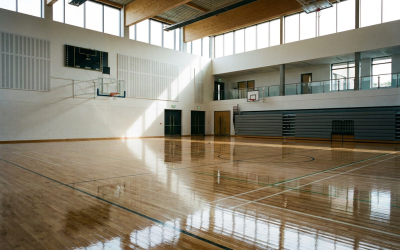
A high-shine finish may show every dent and ripple on a period pine floor. Many older homes suit satin, matt or extra matt finishes better.
Ignoring subfloor issues
Creaks, movement and draughts often come from fixings or subfloor problems, not just the board surface.
Using a one-size-fits-all method
Victorian pine needs a different mindset from hardwood parquet or modern engineered flooring.
How This Fits South West London Homes
South West London has many homes where original timber is part of the property’s appeal. In those settings, a properly restored Victorian pine floor can work in almost any room except persistently damp spaces. Hallways, reception rooms, bedrooms and studies are all strong candidates.
For homeowners already planning broader upgrades, this article also gives you a natural opportunity to link internally to:
- Wood Floor Sanding in South West London
- Breaking down the process of staining wood floors
- Worktop Refinishing in South West London for a Fresh Modern Look
- South West London floor sanding and restoration services
Final Answer: Can Victorian Pine Floorboards Be Sanded and Restored Properly?
Absolutely — in most cases, Victorian pine floorboards can be sanded and restored properly, and the results can be outstanding.
The real secret is not simply sanding them. It is understanding how old pine behaves, carrying out the right repairs first, using a careful abrasive sequence, and choosing a finish that protects the boards without stripping away their period character. When that happens, what once looked tired, scratched, gappy or paint-marked can become one of the best features in the house.
If you have original boards hidden under carpet or old coatings, the smartest next step is a proper survey. A specialist in wood floor restoration in South West London can tell you whether your Victorian pine is a straightforward restoration, a repair-and-restore project, or a floor that needs partial board replacement before finishing.