Church Wood Floor Restoration In South West London: Preserving Heritage Under Heavy Footfall
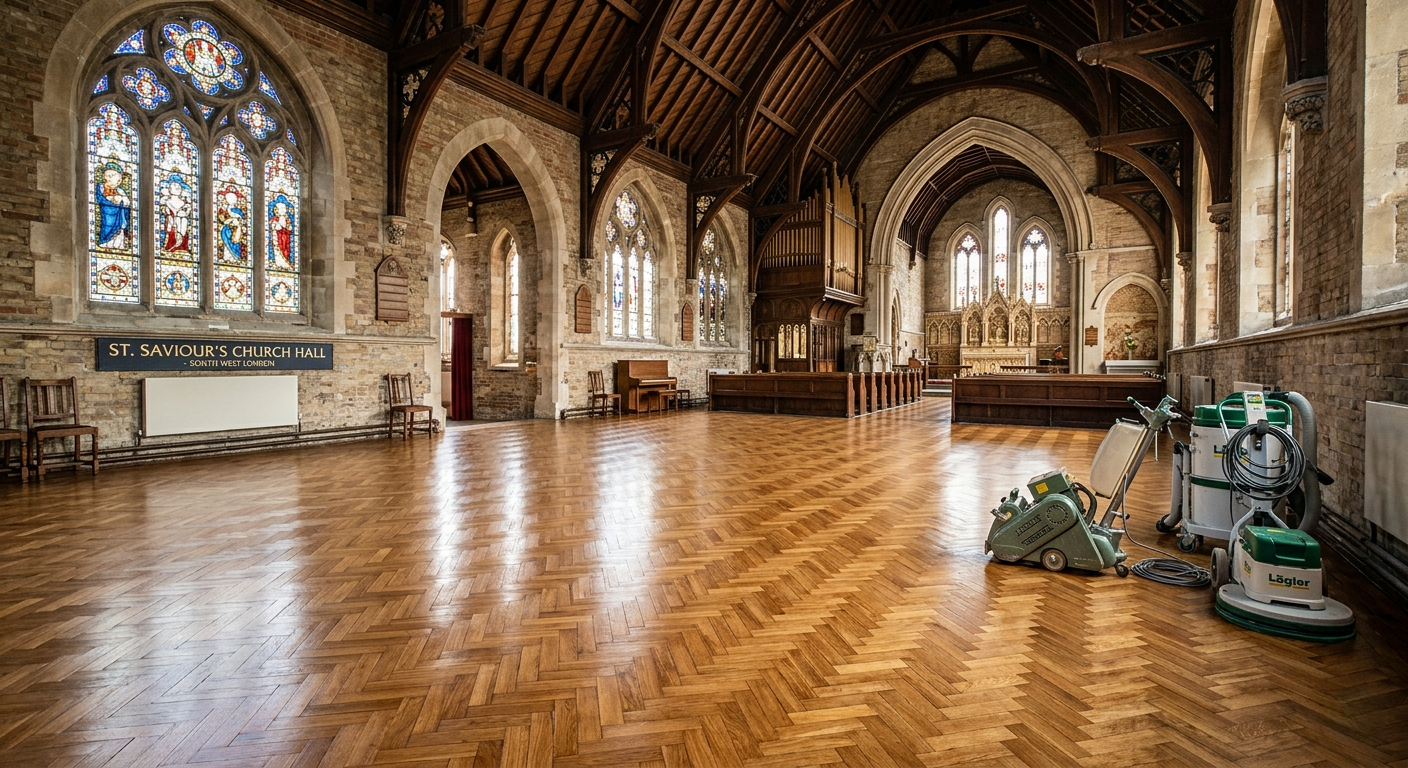
From the historic, high-ceilinged parish churches of Wimbledon and Richmond to the vibrant community and multi-use church halls in Clapham, Tooting, and Wandsworth, South West London’s ecclesiastical buildings are the beating hearts of their communities. These spaces host everything from Sunday services and weddings to weekday nurseries, coffee mornings, and local polling stations.
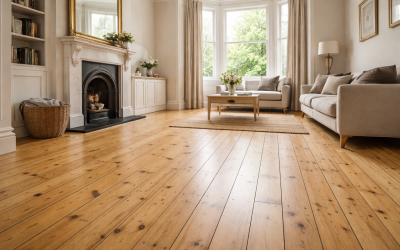
However, centuries or decades of continuous, heavy footfall take a severe toll on traditional timber. Whether your property features classic Victorian pine floorboards, intricate reclaimed oak parquet, or heavy-duty structural maple, the structural integrity and aesthetic beauty of the wood eventually degrade. Over time, protective seals wear away, exposing the bare wood to ingrained dirt, moisture ingress, structural warping, and splintering. For church committees, parsonage councils, and property managers, executing timely commercial floor sanding in South West London is essential for balancing the preservation of historic character with modern health and safety compliance.
Restoring these expansive, historically significant floors requires far more than a standard domestic sander. Working with an experienced commercial floor sanding contractor in South West London ensures a highly specialized approach that respects heritage architecture while applying modern, commercial-grade durability.
Our Specialist Ecclesiastical Restoration Process
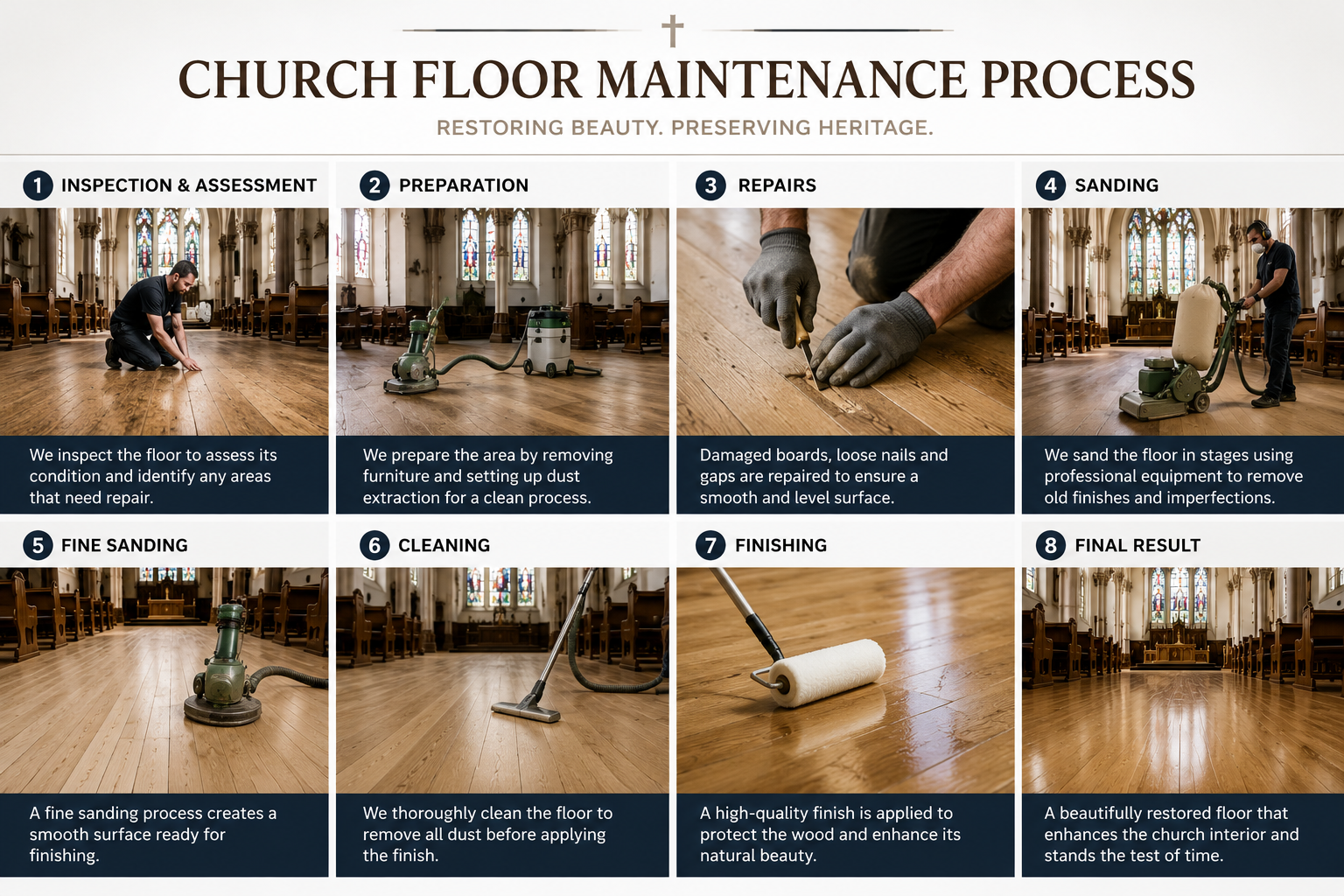
Restoring a church or community hall floor is a structural and artistic process. As an established local specialist, we follow a rigorous, step-by-step methodology tailored to the unique demands of heritage and public-use buildings.
1. Initial Assessment, Timber Diagnostics & Planning
Every project begins with a comprehensive structural assessment. We don’t just look at the surface; we evaluate the species of the timber, subfloor ventilation, moisture levels, and structural stability.
Many historic churches in conservation areas across South West London suffer from damp issues due to blocked subfloor air bricks or subterranean moisture. Testing the moisture content of the wood is critical before any mechanical work begins to prevent future cupping or shrinking. During this phase, we map out a logistically viable timeline that works entirely around your liturgical calendar, parish services, school holiday terms, or public access needs.
2. Structural Repairs, Board Replacement & Gap Filling
Before any sanding machinery touches the timber, the floor must be structurally sound:
-
Securing the Surface: We carefully counter-sink all protruding historic nails or screws to protect both the wood and our sanding belts.
-
Parquet Stabilization: Loose or lifting blocks—frequently found in high-traffic gangways and underneath fonts or pews—are carefully lifted. Old, brittle bitumen adhesive is mechanically scraped away, and the blocks are rebound to the subfloor using high-strength, flexible modern polymers.
-
Ethical Timber Sourcing: Split or structurally compromised boards are replaced using salvaged, reclaimed timber that matches the age, grain pattern, and species of your original floor.
-
Gap Filling: For structural stability and draught reduction, wider gaps are filled using a traditional mix of ultra-fine, clean wood flour collected during the initial assessment, blended with a professional resin binder like Bona Mix & Fill.
3. Precision Dust-Controlled Sanding
Historic ecclesiastical spaces are filled with irreplaceable artifacts, delicate pipe organs, intricate altars, and stained glass windows. Traditional sanding methods create an invasive cloud of fine dust that can damage these features and require weeks of specialized deep cleaning.
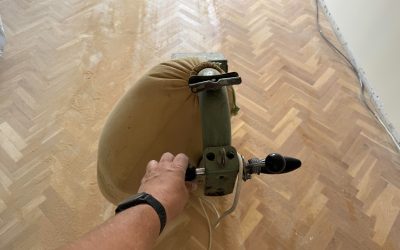
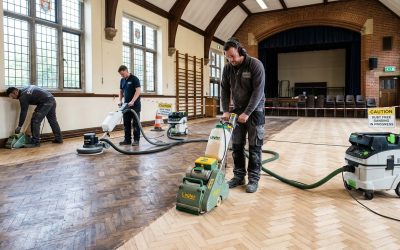
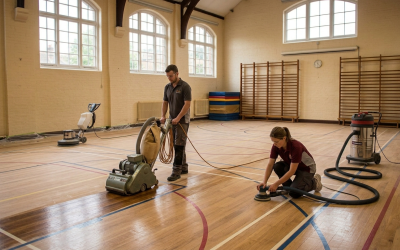
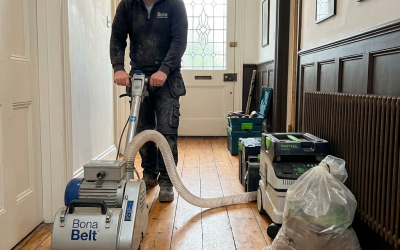
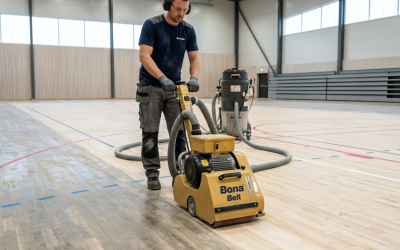
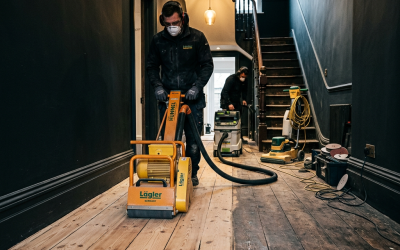
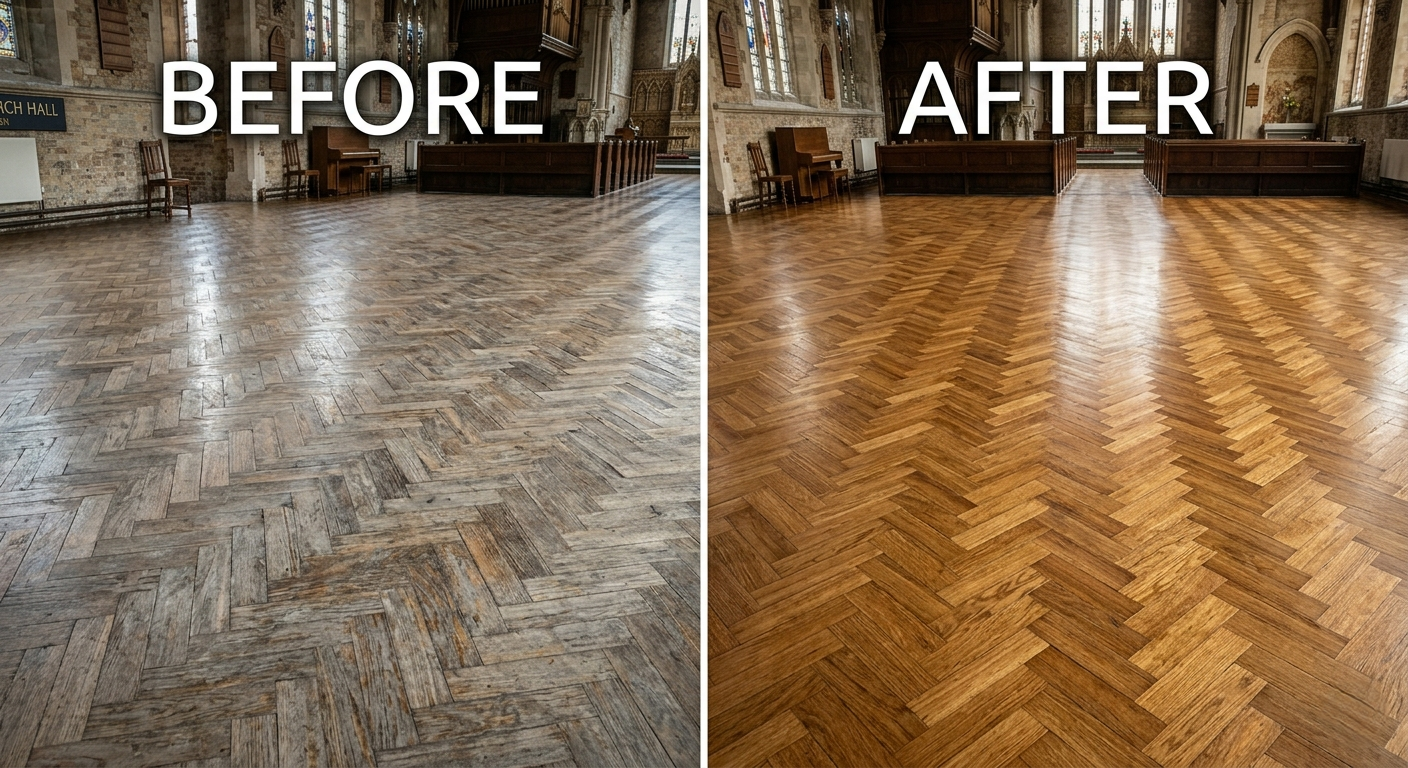
To prevent this, we utilize advanced, continuous-belt sanding machinery equipped with integrated, multi-stage HEPA extraction systems. This ensures an entirely dust-controlled sanding process. We progressively work through coarse, medium, and fine abrasive grits to gently strip away decades of yellowed varnish, deeply ingrained grime, and historical scratching, leaving a perfectly flat, level, and tactile surface ready to absorb protective sealants.
4. High-Performance Finishing Options
The choice of finish dictates both the appearance and the long-term maintenance lifecycle of the floor. We strictly specify premium, professional-grade products from industry-leading manufacturers:
-
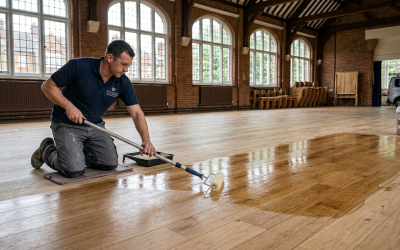
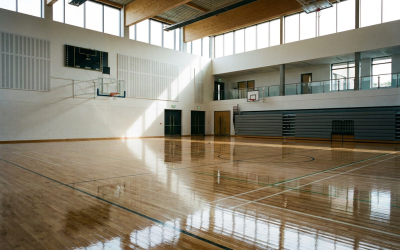
Two-Component (2K) Polyurethane Lacquers: For high-traffic nave areas, entrances, and community halls hosting heavy community use, we apply heavy-duty 2K lacquers such as Bona Traffic HD or Loba 2K Invisible Protect. These commercial finishes provide maximum scratch and chemical resistance while preserving a natural appearance.
-
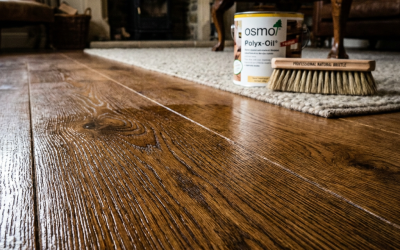
Hardwax Oils & Light Oils: For heritage spaces where a traditional, subtle patina is preferred, professional hardwax oils from brands like Osmo penetrate deep into the timber pores. This option allows the wood to breathe and offers the distinct advantage of localized spot-repairs without requiring a full sand-back in the future.
5. Structured Maintenance Planning
Our relationship does not end when the final coat cures. To maximize the lifespan of your investment, we provide custom handovers and staff training on specialized commercial wood floor maintenance in South West London. This includes establishing correct cleaning protocols, avoiding water-saturated mopping, specifying pH-neutral timber cleaners, and setting up periodic proactive recoating schedules to completely avoid the disruptive cost of future re-sanding.
Minimizing Disruption to Parish Life
We understand that managing a church or community facility means balancing multiple stakeholders. Unlike domestic spaces, commercial and ecclesiastical projects require absolute flexibility:
-
Flexible Scheduling: We can coordinate works during low-occupancy periods, deep winter recesses, or specific school holiday terms for multi-purpose church school halls.
-
Clear Quote Process: We provide detailed, transparent, fixed-price specifications. We can generate initial estimates via photographs, video walk-throughs, and accurate floor dimensions, followed by a formal onsite survey to verify subfloor conditions.
-
Comprehensive Commercial Operations: Our team executes full restoration works under strict health and safety protocols, backed by comprehensive public liability insurance tailored for historic and public buildings.
FAQs
What Is Church Wood Floor Restoration?
Church wood floor restoration involves sanding, repairing and refinishing worn timber floors to restore their appearance, preserve their character and provide long-lasting protection. It is an ideal solution for maintaining historic and heavily used church floors.
Why Is Wood Floor Restoration Important for Churches?
Church floors often experience years of foot traffic, moving furniture and natural wear. Professional restoration helps preserve the beauty and heritage of the building while extending the life of the flooring.
What Are the Benefits of Church Floor Restoration?
Restoration enhances the appearance of the floor, improves durability, makes cleaning easier and helps retain the original character of the church. It is also more economical than replacing the flooring.
How Much Does Church Wood Floor Restoration Cost?
Costs depend on the size of the area, the condition of the floor, the type of wood and the finish selected. We provide free surveys and no-obligation quotations for churches throughout South West London.
Can Historic Church Floors Be Restored?
Yes. Traditional and historic church floors can be carefully restored using specialist techniques designed to preserve their original character and architectural significance.
What Types of Church Floors Can Be Sanded and Refinished?
We restore solid wood floors, parquet flooring, pine floorboards, oak floors, stage areas, church halls and community spaces associated with churches.
Can Parquet Floors in Churches Be Restored?
Yes. Damaged or worn parquet flooring can be repaired, sanded and refinished to revive its original beauty while maintaining its distinctive pattern.
What Is the Church Wood Floor Restoration Process?
The process usually involves an inspection, repairs, sanding, gap filling and the application of durable finishes to create a smooth and attractive surface.
How Long Does Church Floor Restoration Take?
The duration depends on the size and condition of the floor, but most church floor restoration projects are completed within several days.
Is Floor Sanding Dust-Free?
Modern dust-extraction systems capture most sanding dust, providing a cleaner and more efficient restoration process.
Is the Restoration Process Noisy?
Some noise is unavoidable during sanding, but work can often be scheduled to minimise disruption to church services and community activities.
Can Damaged Floorboards Be Repaired or Replaced?
Yes. Loose, cracked or badly worn floorboards can be repaired or replaced before sanding and refinishing begins.
What Finishes Are Available for Church Wood Floors?
We offer commercial-grade lacquers, hardwax oils and matt or satin finishes that provide excellent protection while enhancing the natural beauty of the timber.
Which Finish Is Best for High-Traffic Church Areas?
Durable water-based lacquers are a popular choice for church halls and aisles because they offer excellent protection and are easy to maintain.
Can You Restore Floors in Church Halls and Community Centres?
Yes. We regularly restore floors in church halls, meeting rooms and community spaces used for events and activities.
Can Wooden Church Stages Be Sanded and Refinished?
Absolutely. Church stages and performance areas can be restored to provide a safe and attractive surface for services and community events.
Do You Offer Out-of-Hours Church Floor Restoration?
Yes. Evening, weekend and holiday work can often be arranged to minimise disruption to worship and other activities.
Can Work Be Scheduled Around Church Services?
Yes. Restoration work can be planned around regular services, weddings, funerals and community events to ensure minimal inconvenience.
Are Water-Based Finishes Safe for Congregations?
Yes. Modern water-based finishes are low in odour and environmentally friendly, making them suitable for churches and public buildings.
How Often Should Church Wood Floors Be Restored?
Depending on usage and maintenance, church floors generally benefit from professional restoration every 10 to 20 years.
Can Original Pine Floorboards Be Restored?
Yes. Original pine floorboards found in many older churches can often be repaired and restored to preserve their traditional appearance.
Why Choose Professional Church Wood Floor Restoration in South West London?
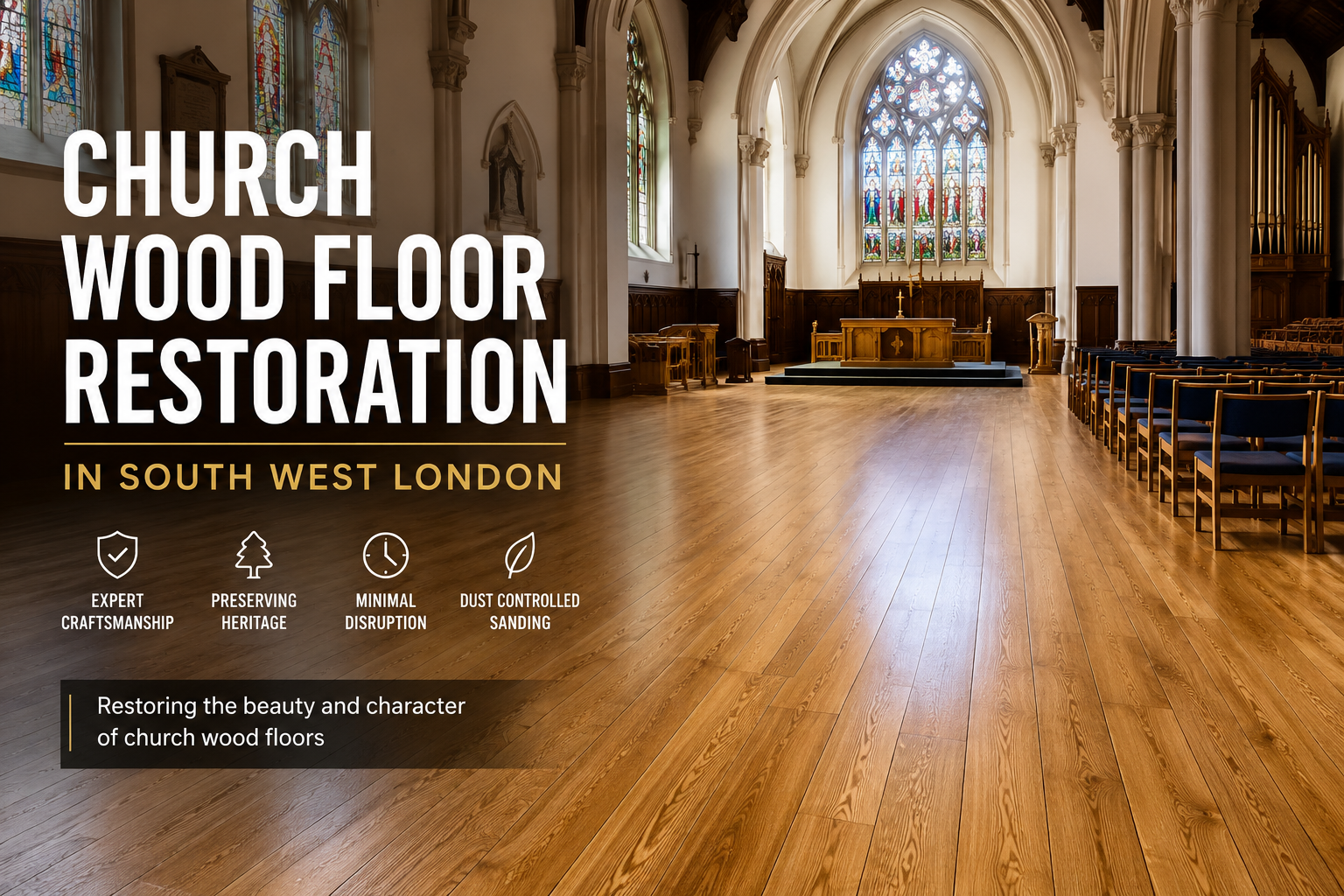
Professional restoration ensures careful workmanship, dust-controlled sanding and durable finishes that protect the floor while respecting the character of the building.
Do You Provide Free Surveys and Quotations?
Yes. We offer free site visits and no-obligation quotations for church floor restoration projects throughout South West London.
Can You Match Existing Wood Floor Colours?
Yes. We can apply stains and finishes to match existing flooring and maintain a consistent appearance throughout the church.
How Can I Maintain Church Wood Floors After Restoration?
Regular sweeping, prompt cleaning of spills and the use of protective pads beneath furniture will help preserve the finish and extend the life of the floor.
What you should do next
Restore the structural integrity, safety, and historic beauty of your property’s timber flooring. Contact our specialist team today on 0800 335 7565 to discuss your project requirements or to arrange a comprehensive onsite consultation.
Email your floor dimensions, photographs, or video walkthroughs directly through our website contact portal for a rapid preliminary evaluation.